How to Overcome Perfectionism and Decision Paralysis in Leadership
What’s it Like for Your Team to Interact with You?
It is a question worth pondering over.
In the high-pressure environment of leadership, it is easy to become preoccupied with your own internal narrative. After a meeting ends or a difficult conversation concludes, your attention often retreats inward. You replay the scene in your mind: how you felt during the exchange, what you meant to say but didn't, how it unfolded, and whether you achieved the specific outcome you wanted.
Now imagine consciously turning that attention toward your team.
How do they feel after each interaction with you?
- Energised, inspired, excited
- Heard, seen, mattered
- Disappointed, fearful, disengaged
When feelings and thoughts pull in different directions, feelings tend to win.
This is a fundamental truth of human interaction. You can provide the most logical, well-reasoned instructions in the world, but if those instructions are delivered in a way that makes a team member feel undervalued or intimidated, the "feeling" of the interaction will override the "content" of the message.
A leader can be technically perfect—hitting every KPI, delivering every deadline—yet still fail to lead effectively because they have neglected the emotional climate of their team. If a team member feels fearful, they will stop sharing the very ideas and warnings you need to hear. If they feel disengaged, their best work will remain untapped.
Mindful leaders learn to zone in on how team members are feeling because they are aware that emotional intelligence, especially social awareness, is key. It is the difference between managing a set of tasks and leading a group of people.
The Gap Between Perception and Reality
One of the greatest challenges in leadership is that you cannot see your own "presence" as clearly as others do. You see your intentions; they experience your impact.
You may intend to be firm because the deadline is looming. They may perceive that firmness as a lack of trust in their capability. You may intend to be efficient by moving quickly through the agenda; they may perceive that speed as a lack of interest in their input.
To bridge this gap, you must move from assuming how you are perceived to actively seeking to understand how you are experienced. This requires a shift in focus from *what* is being said to *how* it is received.
Cultivating Social Awareness
Social awareness is the ability to pick up on the subtle cues—the slight change in tone, the hesitant pause, the body language that signals a team member is holding something back. It is about being present enough to notice the "unsaid" parts of a conversation.
When you are fully present, you can sense when a team member is struggling to find the words. You can notice when a room goes quiet not because of agreement, but because of hesitation. By noticing these cues, you can create a space where it is safe for them to speak up.
This awareness allows you to adjust your leadership in real-time. If you sense a team member is feeling fearful, you can soften your approach to build safety. If you notice they are disengaged, you can pivot to find the spark of interest that drives them.
Practical Pathways to Enhanced Awareness
Moving from self-reflection to team-centric awareness is not an overnight shift; it is a practice of intentionality. Here are ways to begin:
1. The Power of the Regular One-on-One
Regular one-on-ones with direct reports are a primary tool for leadership. They provide a dedicated space to understand your team members beyond their output. Use this time to go deeper than the status update. Ask about their feelings, their personal struggles, and the friction points they face in their daily work. When you listen to these things, you signal that they matter.
2. The Practice of Full Presence
Staying mindful and fully present in each team interaction is another way to build this connection. This means putting away the distractions—the phone, the next meeting on your calendar, the mental list of tasks. It means giving the person in front of you your undivided attention for those few minutes. When they feel that you are truly with them, the quality of the interaction changes instantly.
3. Asking for Feedback on the "How"
One of the most powerful ways to understand your impact is to ask directly. You might ask a trusted team member: "How did that meeting feel for you?"or "When I give feedback, do you feel supported or pressured?"* This invites them to share their experience of your leadership, providing you with the data needed to adjust.
The Influence of Leadership
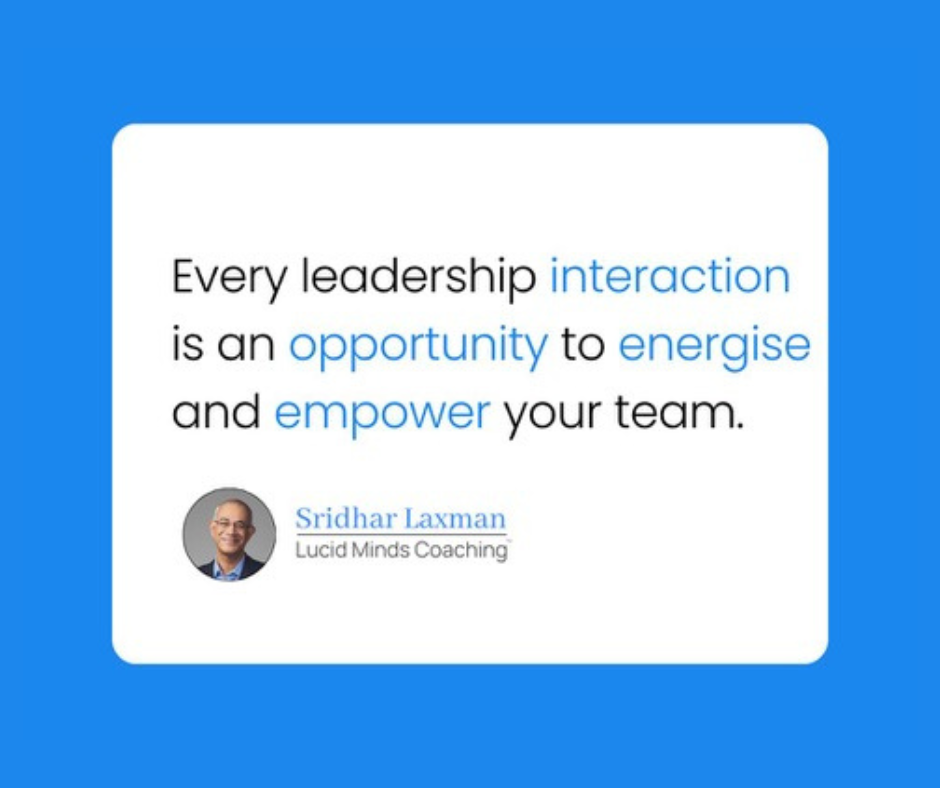
As a leader, you have the power to influence your team’s feelings. This is perhaps the most significant responsibility of your role. Every interaction is an opportunity to shape the emotional climate of your organisation.
You can choose to let that influence lean toward the ones that inspire, empower, and energise them. When you lead with emotional intelligence, you create a culture where people feel safe enough to be honest, brave enough to innovate, and motivated enough to give their best.
Reflections for You
As you move through your week, I invite you to hold these three reflections in your mind:
- How mindful am I of my team’s feelings, not just their thoughts?
- What can I do to enhance my emotional intelligence in the next hour?
- Where do I see opportunities for strengthening relationships today?
A Closing Thought
The way your team feels when they interact with you is the most enduring legacy of your leadership. It is the foundation upon which trust is built and where true collaboration begins. By choosing to be aware of their feelings, you are not just improving your leadership; you are creating a space where your team can flourish.