From Perfectionism to Excellence: What the Shift Could Mean for Your Leadership
How often do you find yourself going back to something that is already done, looking for what might still be wrong?
Perhaps a presentation has been reviewed three times and you are about to open it a fourth, or a decision that needed to be made last week is still open because something about it does not feel quite settled, or you deliver a piece of work and instead of feeling satisfied, you feel exposed.
These experiences may be worth sitting with. They may point to a persistent belief that what you produce is never quite enough, and that until it is, something important remains at risk.
When High Standards Become Something Else
There is a version of high standards that comes from clarity about what matters, one that is energising, purposeful, and generous toward the people around you.
And then there is another version, one that comes from a place that is older and less honest with itself. A fear of being found inadequate. A sense that your worth depends entirely on what you deliver, and that anything less than flawless puts something essential at risk.
This second version tends to feel like the first, and from the outside they can look identical. The difference lives on the inside, in what is driving you.
You may recognise some of this in yourself. In the way you replay a conversation for hours after it has ended. In the way you sit with a completed piece of work and cannot quite release it. In the way delegation feels uncomfortable, not because your team is incapable, but because the standard you hold for yourself feels impossible to pass on.
One leader I worked with described it this way. He would finish a presentation, know it was good, and then spend the next two hours finding reasons to open it again, the feeling that something might be wrong proving stronger than any evidence to the contrary. Over time, he stopped noticing this was a choice. It had become the way he worked. You may recognise something of yourself in that.
What It May Cost You and Those Around You
When this pattern goes unexamined, the cost tends to be felt by the people around you before you notice it yourself.
The people on your team may be experiencing something you have not seen yet. The sense of preparing something carefully and then sensing it will not land regardless, the feeling that your feedback is always about what is missing rather than what is there, the gradual realisation that good work and finished work are two different things in your eyes, and that finished is somehow always premature.
Over time, your team may stop taking initiative, ideas could get held back until they feel polished enough to survive your scrutiny, and risk-taking may decrease because the cost of attempting something imperfect feels too high.
When he and I explored this further, he began to notice that the pattern was not improving his outcomes but delaying them, creating stress in people waiting for his decisions, and sending a message he had never intended to send, that nothing was ever quite good enough.
Where It Often Begins
This way of working tends not to arrive out of nowhere, and it often has roots in your earlier experiences, in environments where achievement was the primary currency, where being wrong carried a cost that felt significant, and where the safest thing to be was competent and certain.
Over time, those experiences may have shaped a logic that is still running inside you, one where your performance feels safe and anything less feels like exposure, where the next piece of work is where you will finally feel settled, and where that feeling keeps moving forward no matter how much you deliver.
That logic may have served you well and driven real results. And yet it could also be placing a running tax on how you lead, a baseline tension that pulls your attention toward what might go wrong rather than what is already working.
In coaching conversations, leaders often describe a version of what you may be feeling, a catastrophic judgement they fear if they get something wrong, yet when they pause to examine it they frequently find that this catastrophe has never happened. The belief is older than the evidence. It belongs to a different time.
What Becomes Possible When You Begin to Loosen the Grip
The shift away from this pattern tends not to come through trying harder, because trying harder is often what it asks of you, and the real movement tends to come through something that feels almost counter-intuitive.
Space. The kind that comes when you give yourself permission to start before everything is in place, to deliver work that is genuinely good rather than technically complete, to say “I do not know” in a meeting and find that the room does not collapse, to finish something, release it, and allow it to be enough.
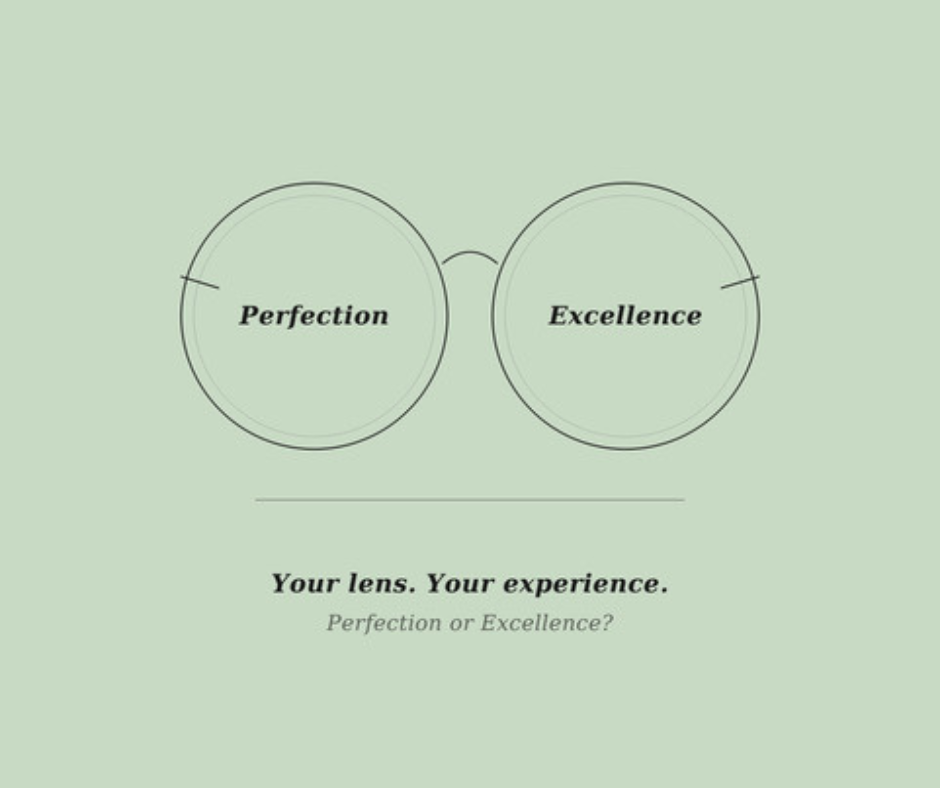
This is where excellence becomes available to you. Excellence directs your energy toward what genuinely moves the work forward rather than what protects you from criticism, it finishes things, learns from what is delivered, and grows through iteration rather than waiting for conditions that may never fully arrive.
When you begin to make this shift, something tends to change in the people around you too. Those who felt the weight of your standard may begin to contribute more freely, ideas that were held back may surface earlier, and the culture around you could move from careful self-protection toward genuine contribution, because the space you create for yourself tends to extend outward to those you lead.
This shift may require starting to believe that your worth is not at stake when something is imperfect, noticing when the old pattern is active, and asking what it is protecting you from.
Some leaders find it helpful to begin with something small, sharing a half-formed idea in a meeting, sending a response before it has been rewritten four times, delivering at eighty percent and watching what happens. Each time the feared catastrophe does not occur, the grip loosens a little, and your leadership begins to feel like something you can sustain.
I Invite you to explore these
▷ Where would you begin if it did not have to be perfect?
▷ How would it feel to deliver something at eighty percent and let it be enough?
▷ How do think this pattern may be affecting the people around you?
▷What can help you acknowledge the progress till date more often?
The choice to pursue excellence over perfection may be one of the most liberating decisions a leader can make. The standard stays. What changes is your relationship with it.
Connect with me to explore how coaching can support you in examining the beliefs beneath this pattern and finding a more sustainable way to lead.
Releated Article
The Power of Pause: Reflection as a Strategic Leadership Advantage
The Power of Self-Control in Leadership: Stay Calm, Lead Better