How Leaders Find Clarity When Their Work No Longer Feels Aligned
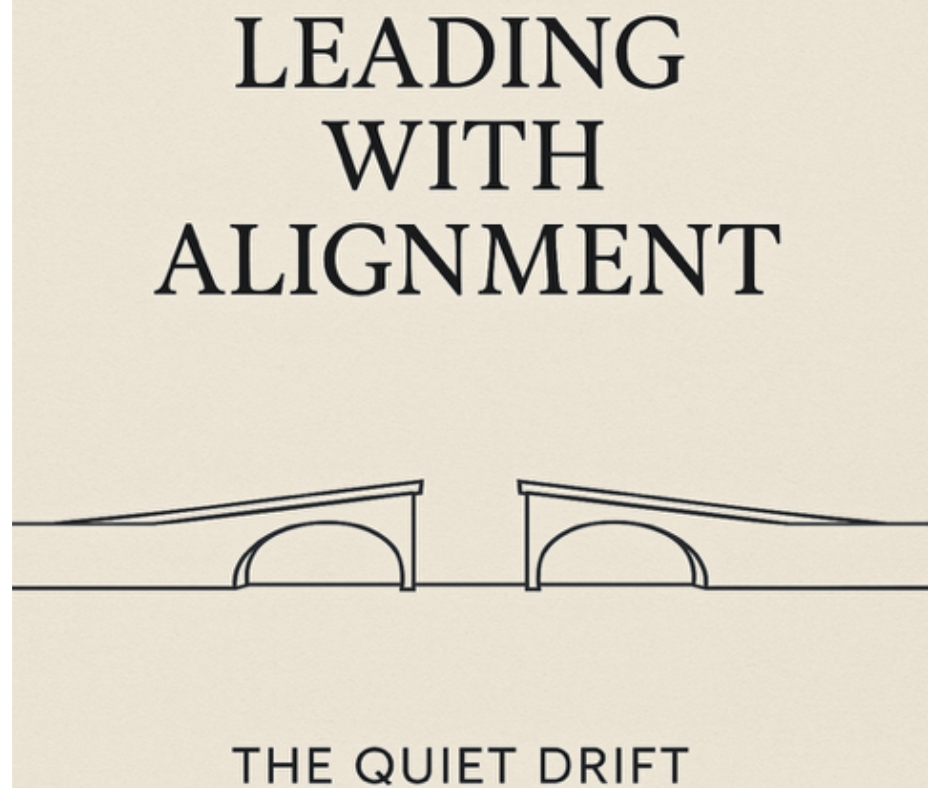
The Quiet Drift
Misalignment in leadership rarely arrives with a clear moment.
It grows slowly, in places others cannot see.
A leader delivers results, meets expectations, and stays dependable on the surface.
Yet inside, something begins to loosen.
The win that once brought energy now feels muted.
The work still matters, but the sense of meaning is dimmer.
The day moves forward, yet the heart feels slightly behind.
These early signals are quiet.
No disruption, no crisis, just a gentle sense that something has shifted.
Teams often notice a change long before the leader acknowledges it.
They sense a softer conviction, a slight distance in tone, a different kind of presence.
Direction is still clear, yet the feeling behind it has changed.
This is the quiet drift, when the internal drive that once fueled a leader begins to move in a different direction from the role they continue to carry.
Where Alignment Starts to Loosen
Misalignment grows when output replaces reflection.
When speed becomes the norm and inner pauses disappear.
The calendar fills quickly, leaving little space to reconnect with the reasons behind the work.
Over time, movement begins to feel like progress even when the leader’s inner compass is pointing elsewhere.
The system rewards responsiveness and effort, and the leader adapts.
But as the leader adapts, awareness of their own truth becomes harder to access.
Soon, they are leading effectively, yet feeling slightly out of place within themselves.
The Inner Cost of Drifting
When alignment fades, small disruptions in coherence begin to appear.
A decision takes longer because the instinct that once guided it feels out of reach.
Conversations require more effort because intention is harder to locate.
Meetings feel heavier because tone carries an unspoken tension.
The leader still shows up with care, yet a quiet unknown occupies part of their attention.
The gap between personal values and situational demands silently expands.
This internal strain often goes unnoticed by others, yet it shapes the emotional climate of the team.
Initiative slows.
Confidence becomes cautious.
Trust requires more reassurance.
The environment begins to reflect the leader’s unspoken drift.
The Moment That Brings Awareness
Realignment often begins during achievement.
A milestone is reached, recognition arrives, and the leader waits for the familiar feeling of satisfaction.
Instead, there is stillness.
A soft question surfaces:
“Why doesn’t this feel like it used to?”
This moment is not a failure.
It is a sign of depth, a sign that the leader is listening inward again.
Awareness grows, and with it, a quiet doorway opens.
The doorway back to alignment.
The Path Back to Alignment
Realignment is less about effort and more about coherence.
When the inner pace slows, clarity appears.
The questions become gentler:
What matters to me now?
Where is my energy actually going?
Which parts of my leadership feel true, and which feel worn?
As clarity strengthens, presence changes.
Tone becomes steadier.
Conversations feel cleaner.
The leader’s influence begins to come from authenticity rather than habit.
Teams respond quickly to this shift.
They sense the return of sincerity and direction.
They move closer, speak more openly, and feel safer.
Realignment shows itself in small ways, in consistent behavior, in warm signals,
and in decisions that feel grounded from within.
How Aligned Leadership Feels
Aligned leaders carry a calm certainty.
Their words are simple, their presence steady.
They don’t rely on volume or force — their clarity does the work.
People trust them because their behavior and intentions match.
Conversations feel honest.
Expectations become easier to navigate.
Culture gains a sense of direction.
This kind of alignment turns leadership into a felt experience, an expression of
coherence and sincerity that others instinctively follow.
Questions for Reflection
• Where in my leadership does progress feel disconnected from purpose?
• Which achievements look complete yet feel unfinished inside me?
• What subtle signs of drift have I been ignoring?
• How does the way I speak influence the emotional steadiness of others?
• If I created even a brief pause to realign, what truth might rise to the surface?
These questions are doorways. They help leaders reconnect with themselves
before making new commitments to others.
Final Insight
Alignment is never fixed.
It evolves as leaders evolve.
When alignment fades, presence fades with it.
The leader continues to act, yet feels slightly away from themselves.
When alignment returns, clarity follows.
Relationships deepen.
Decisions feel lighter.
Leadership begins to feel whole again.
Invitation
If success lately feels quieter than it once did, this may be the moment to reconnect with what gives your work meaning.
Coaching provides a calm and private space to explore that reconnection —
to understand where the drift began,
to strengthen the voice within,
and to rebuild the clarity your team relies on.
If you feel ready to realign your leadership and step into a chapter that feels true to
you, I would be glad to walk that path with you.
Follow for expert insights on leading with clarity and impact.
Additional reading
https://www.sridharlaxman.com/blog/what-carries-a-strategy-from-idea-to- execution
.png)

.png)