Managing Upward Delegation Effectively: What Mindful Leaders Do Differently
How often do decisions land on your desk that your team could have made themselves?
You are a capable, experienced and deeply committed leader to your team. And yet your calendar tells a different story.
It starts gradually. A question here, a check-in there. A team member who wants to run something by you before they proceed. Another who needs your sign-off on something they have handled before. Before long, the pattern settles into the fabric of how your team works. Problems find their way to your desk. Decisions wait for your approval. And you, somewhere between one meeting and the next, wonder how it came to this.
You did not set out to build this dynamic. Everything you did, you did out of care. You stayed available. You had the answers. You made it safe for your team to bring things to you. And they did. Consistently, reliably, increasingly.
What You May Not Have Noticed
What you may not have noticed is what it was doing to them. And perhaps, in ways you have not yet named, to you.
The energy spent on decisions that were never yours to make. The meetings that left you stretched thin before the real work of your day had even begun. The slow, creeping sense that you are running hard and somehow falling behind.
When Availability Becomes a Ceiling
During a coaching conversation earlier this year, a senior leader described what had become her reality. Her calendar was packed. Her team, talented and experienced, had begun to make her their first port of call for decisions well within their capability. She found herself saying yes to meetings she knew she should not be in, feeling an inner agitation when she did. Carrying a growing sense that something needed to change, though she could not name what.
The team, meanwhile, grew hesitant. Less willing to back their own judgment. Less likely to act without checking first. The very people she had hired for their capability had, over time, learned to wait.
The Cost of Carrying It All
The costs of excessive upward delegation do not announce themselves. They accumulate. And by the time a leader notices them, the pattern has already settled into how the team operates.
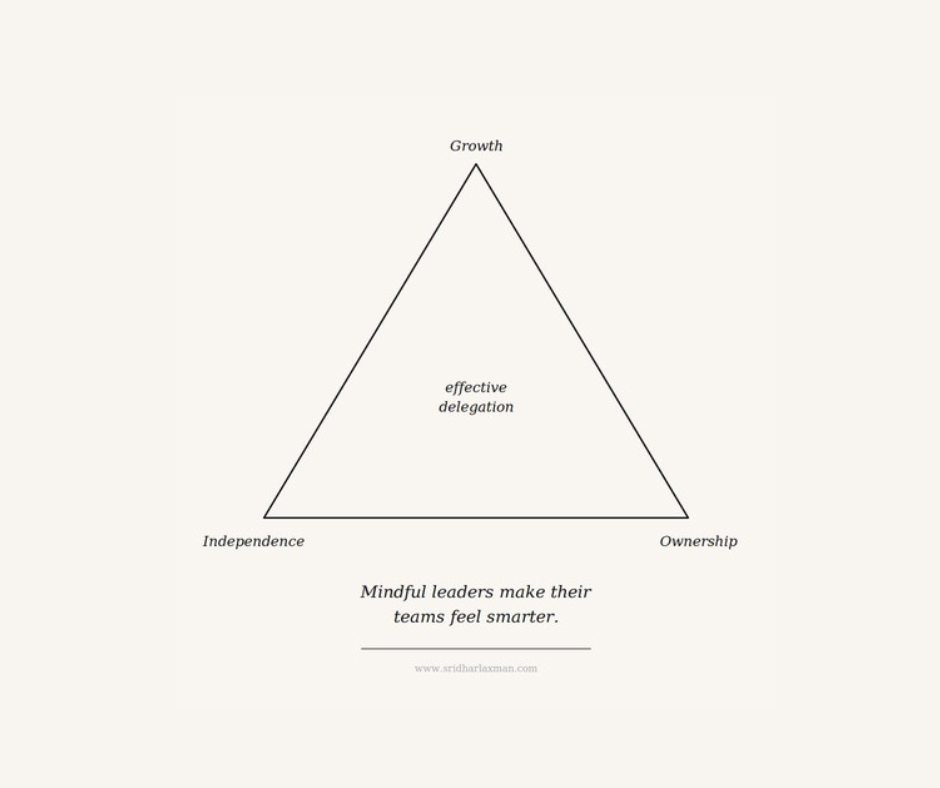
Patrick Lencioni, in “The Five Dysfunctions of a Team,” offers a useful lens here. Where accountability is thin, dependence tends to fill the space. When a team does not feel the full weight of ownership over their decisions, they return that weight to whoever is willing to carry it. Often, that person is you.
The Pattern Beneath the Pattern
What makes this pattern particularly hard to shift is that it rarely has a single cause. It is the accumulation of habitual thought patterns and behaviours, on both sides, that have settled over time.
For the leader, there is often an identity at work. The meaning attached to being available, to having the answer, to being the one others turn to. These are not flaws. They are, in many cases, the very qualities that built your reputation. But at a certain level of leadership, they can gradually become the ceiling on your team’s growth.
What the Research Tells Us
Kouzes and Posner, in “The Leadership Challenge,” observed that the leaders who build the strongest teams share one practice above all others. They enable others to act. They ask questions where they once offered answers. They trust the thinking that emerges when they create space, even when stepping in would feel faster and easier.
That last part is where most leaders find it hardest. Resisting the pull to step in, when you know you could solve it in minutes, asks you to redefine what good leadership feels like from the inside. And that is a deeply personal reckoning.
What the Shift Actually Requires
What unfolded for this leader in the months that followed was something deeper than a technique. It was reflection and conscious choice, made consistently. Examining her patterns. Noticing where she stepped in and why. Sitting with the discomfort of not having the answer ready. Learning to evoke her team’s thinking rather than replace it.
As she began to seek their counsel rather than offer her own, something shifted. Her team started backing their own judgment. Solutions arrived where questions used to. The energy in the dynamic changed.
The Moment Something Changed
None of it was easy. She would be the first to say that. And none of it happened overnight. But something else also changed. She began to feel, perhaps for the first time in years, that she was leading rather than just managing. That distinction mattered deeply to her.
This is what real behavioural change requires. A sustained willingness to look honestly at what you have come to believe about your role, and to make different choices, repeatedly, until a new pattern takes hold.
Where the Leadership Opportunity Lives
The shift from indispensable to trusted is one of the most significant a leader can make. It begins with staying available for the decisions that need you, while creating space for your team to own the rest.
This means becoming present in a different way. Asking more. Directing less. Trusting the thinking in the room before you offer your own.
The Leader You Are Becoming
Your team is more capable than the current dynamic is allowing them to show. They need a leader who believes in their thinking and steps back to let it emerge.
This shift asks something real of you. It asks you to sit with uncertainty, to be patient with the pace of someone else finding their way, to trust before you have proof. That takes courage. And it speaks to the kind of leader you are already reaching toward being.
That leader is already in you. The question is whether you are ready to let them lead.
I Invite You to Reflect on These.
▷ What about my presence might be encouraging my team to delegate upward?
▷ Where am I stepping in out of habit rather than necessity?
▷ How do I lead in a way that brings out the best thinking in those around me?
▷ What would my team be capable of if I gave them more room to lead?
▷ Who am I growing into as a leader when I choose to trust?
Reach out to explore how coaching can support your leadership.
.png)